
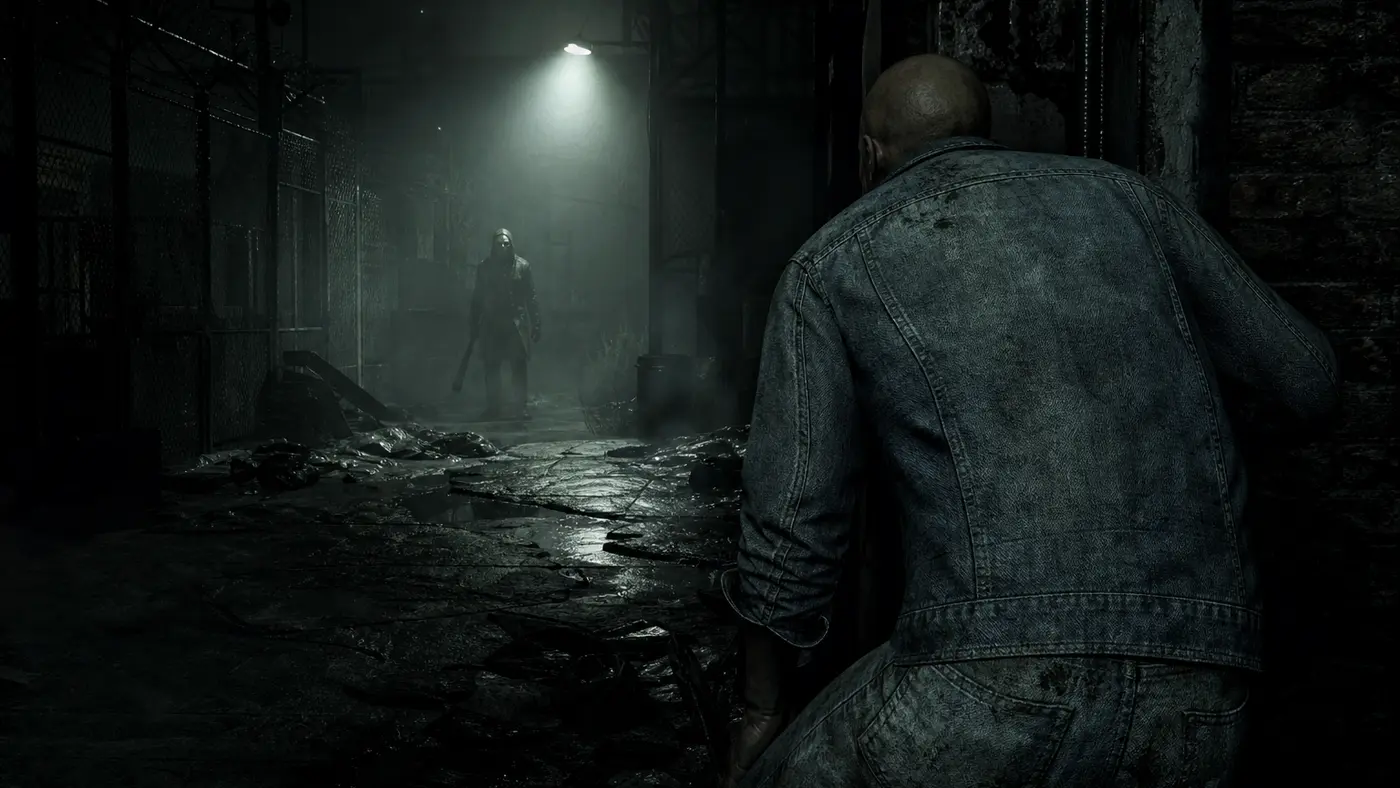
Released in November 2003 on PlayStation 2, Manhunt is the most violent and most disturbing game Rockstar has ever published. You play a death-row convict forced to kill to survive, staged like a snuff film. Banned in several countries and wrongly accused of inspiring a murder, it remains a cult object at the heart of the transgressive DNA of the studio behind GTA.
A Death-Row Inmate, a Snuff Producer, and Carcer City
The pitch fits in one chilling sentence. James Earl Cash, a death-row inmate, is supposed to be executed by lethal injection. Except he’s only sedated: he wakes up taking orders from a voice in his earpiece, “the Director,” who promises him freedom if he takes out the killers sent after him, all of it captured by surveillance cameras for a snuff-film network.
The setting is Carcer City, a rotting industrial hub riddled with gangs and corruption. The Director’s voice belongs to Brian Cox, the Scottish actor now famous for Succession, who plays a producer named Lionel Starkweather, a Los Santos transplant. That name is no accident, and we’ll come back to it.
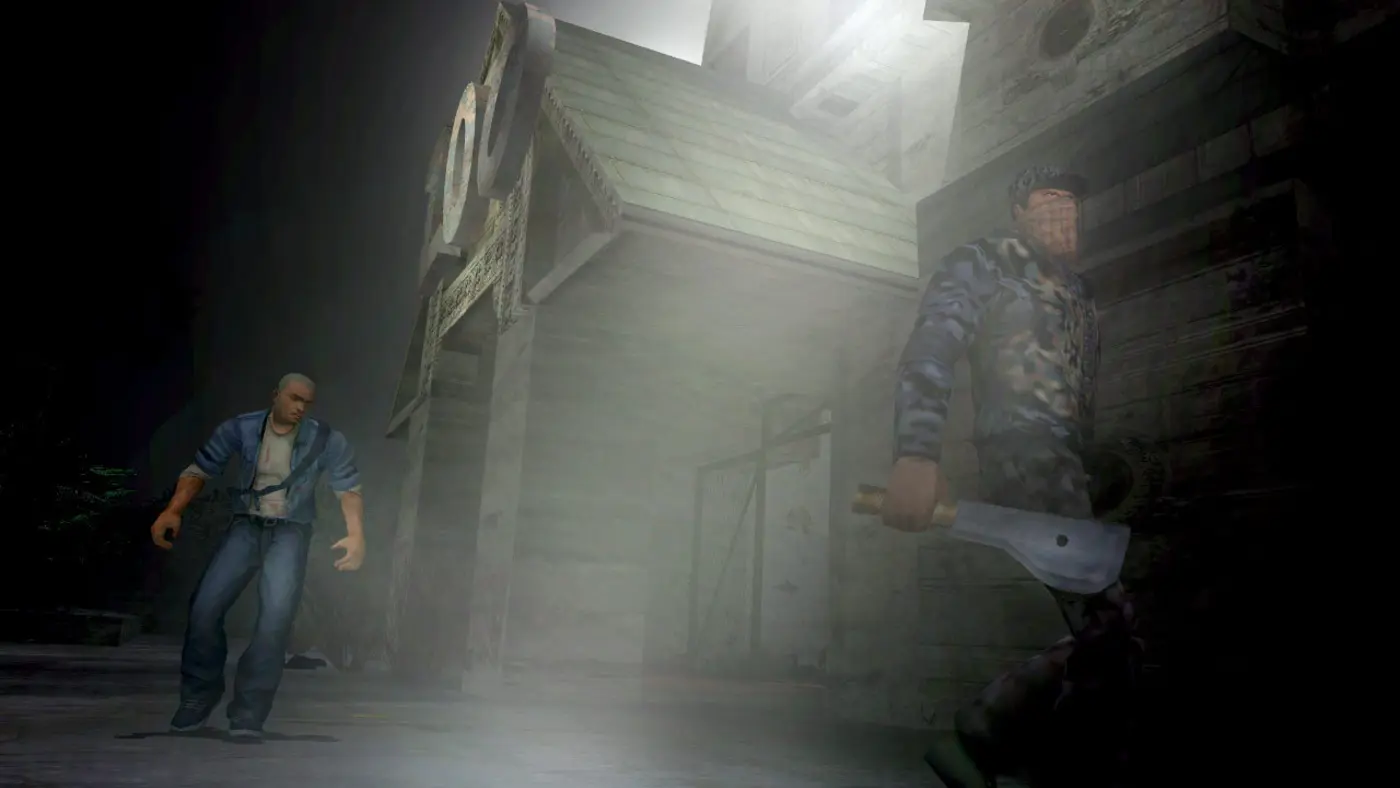
The marketing of the era already leaned hard into the unease, as the original TV ad shows, with its deliberately provocative tone.
The GTA Studio That Scared Itself
Manhunt isn’t a side project handed off to an outside contractor. It comes from Rockstar North, the Scottish studio that, under this name or under its former one, DMA Design, where GTA was born, develops the Grand Theft Auto games. The game even runs on RenderWare, the engine that already powered GTA III, Vice City and San Andreas. On production duty was Leslie Benzies, the future linchpin of the HD-era GTA titles.
The kinship doesn’t stop at the tech. A Rockstar veteran once said Manhunt “nearly caused a mutiny” in the ranks. The difference, he explained, was that with GTA you always kept the excuse of parody and “unconstrained” gameplay: you could play clean. Manhunt leaves no moral escape hatch. Killing isn’t an option, it’s the only mechanic.
Killing Clean or Killing Dirty: The Execution Gameplay
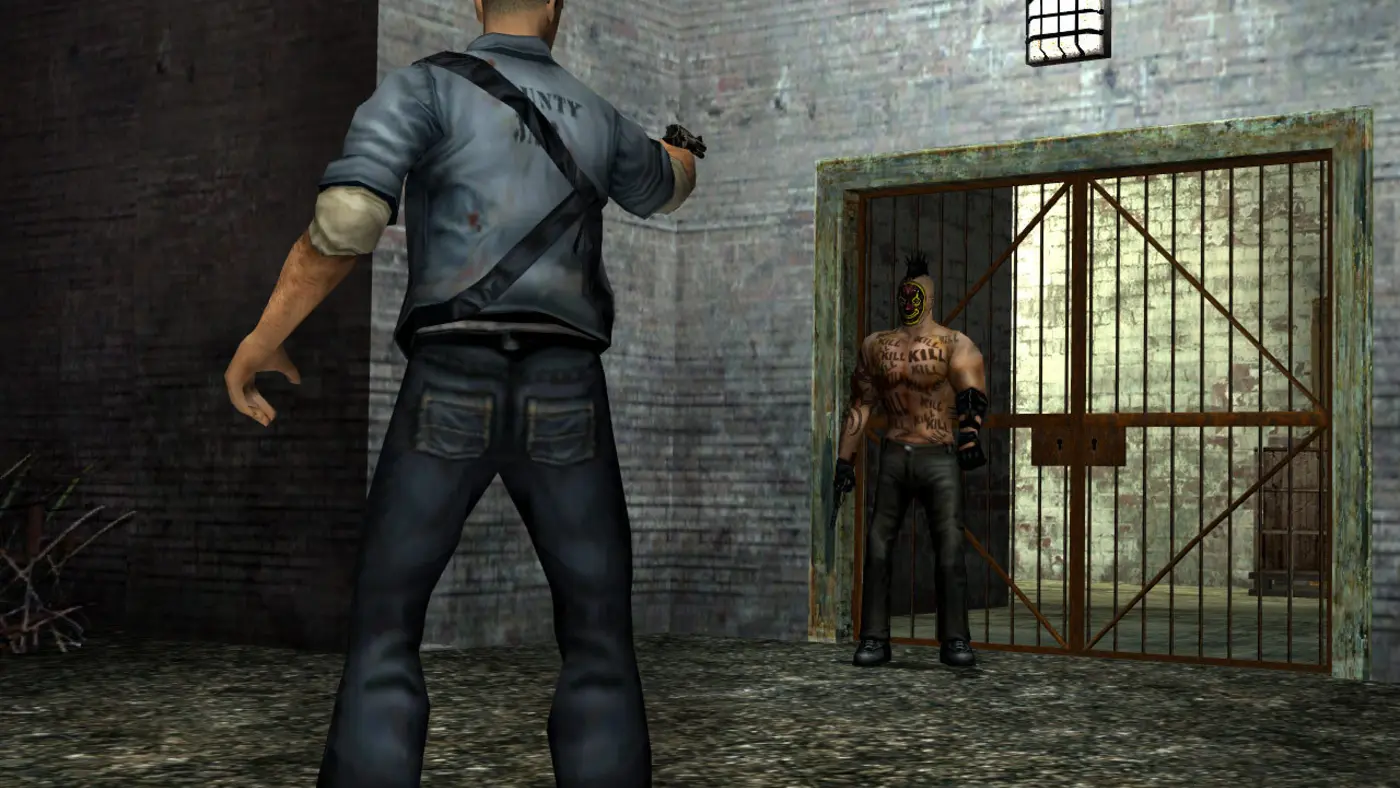
On paper, Manhunt is a third-person stealth game. Twenty levels, called “scenes,” where you advance by hiding in the dark to strike enemies from behind. But its true signature is the three-tier execution system. Hold your lock on a target and a reticle shifts color over time: white for a “hasty,” low-gore kill, yellow for a “violent” execution, red for a “gruesome” murder of gratuitous brutality.
The more savage the execution, the bigger the payoff: your end-of-scene grade, out of five stars on the hardest difficulty, depends directly on the cruelty involved. A plain melee takedown earns you nothing. The game even went so far as to use the PS2 USB microphone or the Xbox Live headset: your own voice could draw the killers in, and an accidental noise would give you away. A rare kind of immersion, in service of a deliberately grueling experience.
Bans, Recalls, and a Murder Wrongly Pinned on the Game
A game this extreme couldn’t fly under the radar. Manhunt was banned in New Zealand as early as December 2003, where simply owning it became an offense, refused classification in Australia in 2004, then outlawed in Germany in 2005, with imported copies confiscated.
But the heaviest chapter is British. In February 2004, in Leicestershire, 14-year-old Stefan Pakeerah was murdered by 17-year-old Warren Leblanc. In the summer of 2004, the victim’s parents publicly accused Manhunt of inspiring the killer, and retailers like Dixons and Game pulled the game from their shelves. The industry, through the ELSPA trade body, pointed out that the title was rated 18 and was never meant for minors. Above all, the police and the courts dismissed any proven link between the game and the crime. Yet the myth of the “game that kills” had already made the rounds in the press.
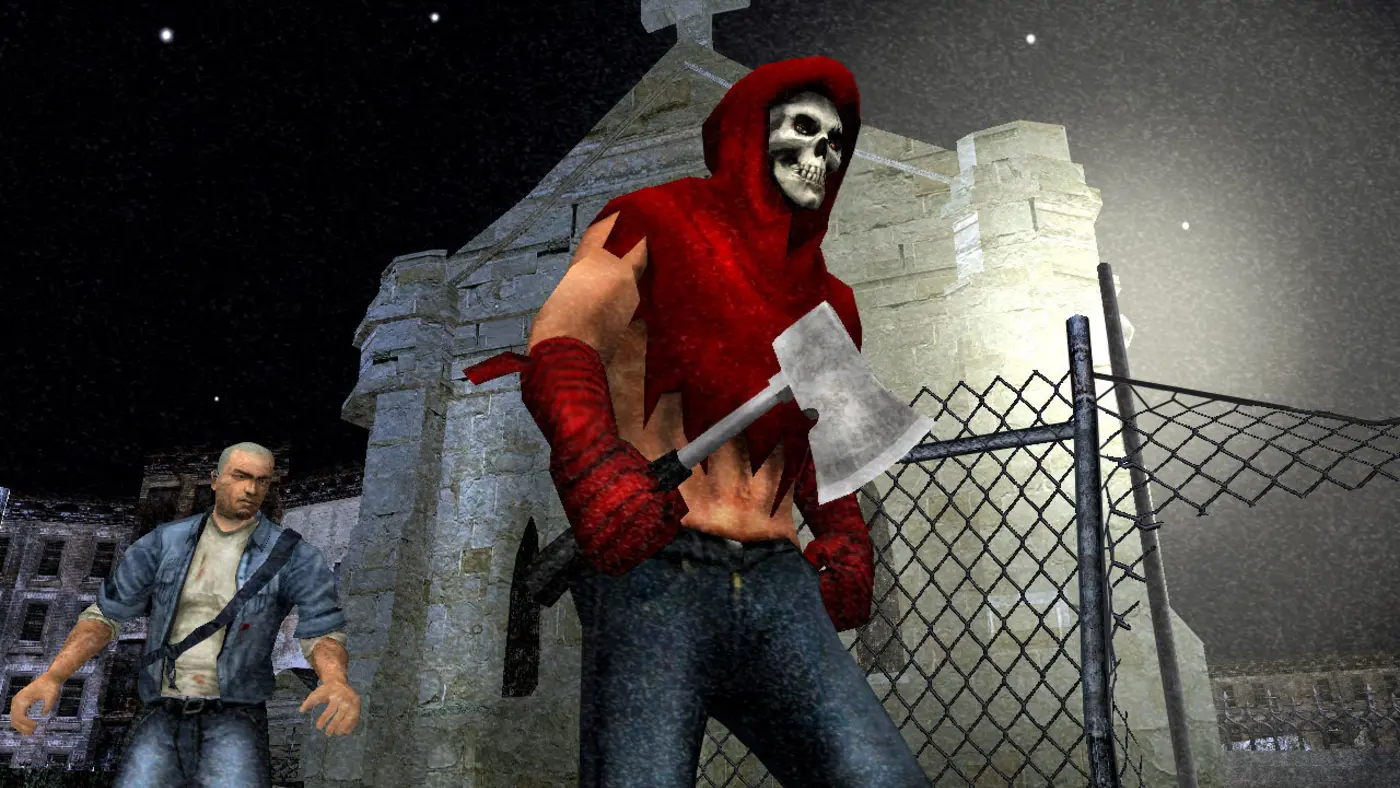
Commercially, Manhunt was never a smash: roughly 75,000 copies in its first month in the US, a fraction of what GTA III and Vice City were pulling in over the same period. But its decent critical reception, around 75 out of 100, and its cursed-game status built it a solid niche cult following.
Manhunt 2, the Game Censorship Nearly Buried
In 2007, the sequel turned the controversy into a textbook case. In the US, the ESRB slapped Manhunt 2 with an Adults Only rating, effectively a ban from store shelves. In the UK, the BBFC flatly refused to classify it, which banned it outright. Rockstar then censored its own sequel, blurring the executions and stripping out the scoring system that rewarded brutality, to land a US M rating. The edited version was rejected by the BBFC at first, before finally being accepted in the 18 category on appeal.
| Aspect | Manhunt (2003) | Manhunt 2 (2007) |
|---|---|---|
| Studio | Rockstar North | Rockstar London (PSP by Leeds, Wii by Toronto) |
| Initial release | PS2, Nov. 2003 (PC and Xbox in 2004) | PS2, PSP and Wii, Oct. 2007 in the US |
| US rating | M (ESRB) | AO at first, then M after cuts |
| United Kingdom | 18, pulled from shelves in 2004 | Rejected by the BBFC, then 18 on appeal |
| Legacy | Cult classic, re-released on PS3 (2013) and PS4 (2016) | One of the most censored games in history |
The Secret Bridges to GTA
For all that, Manhunt isn’t a foreign body in the Rockstar galaxy. Wikipedia notes that it shares its universe with the GTA series: producer Starkweather comes from Los Santos, and Carcer City belongs to the same mental map as Liberty City, Vice City and San Andreas.
More importantly, the studio scattered nods throughout. Piggsy, the chainsaw-wielding, pig-headed killer who closes out Manhunt, haunts the GTA games: Manhunt figurines stashed at Zero’s in San Fierro in San Andreas and its mysteries, and a painting of him tucked inside the vault of the Diamond Casino Heist alongside other masked killers from the series. More recently, a tattoo spotted on the character Cal Hampton in GTA 6 promo art reignited theories of a Piggsy return, a tempting lead but unconfirmed and probably over-interpreted.
So Manhunt remains a piece apart in the Rockstar showcase, sitting between the studio’s other non-GTA games and the franchise’s criminal imagination. A game Rockstar has never remade, but whose shadow still looms over its most polished productions.
Comments
Be the first to react.